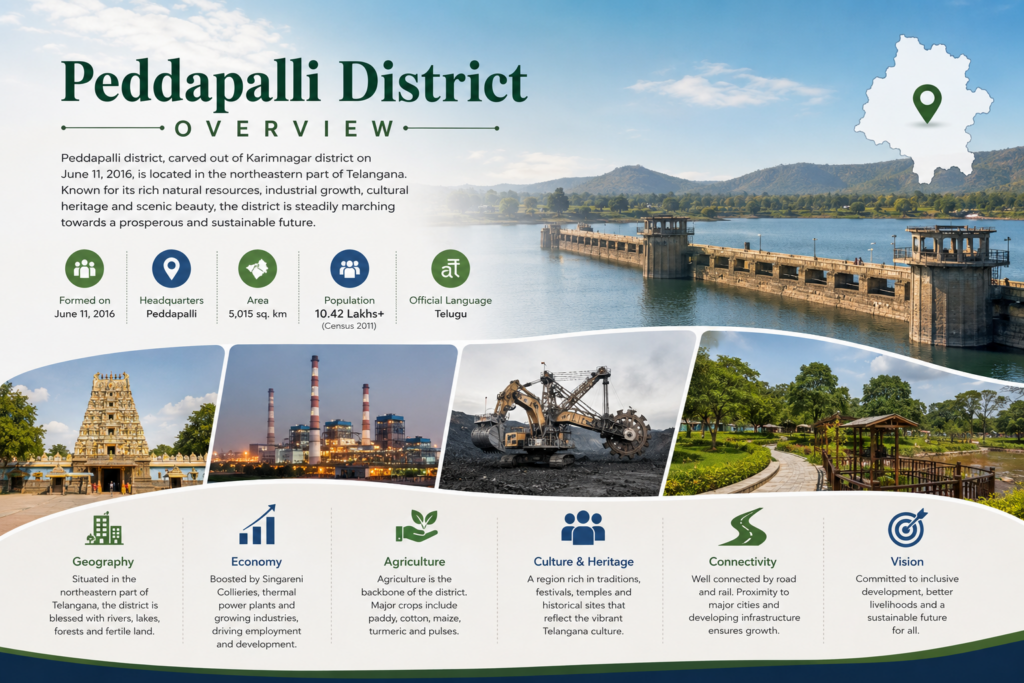
Peddapalli District, located in the northeastern part of Telangana, was formed on 11 June 2016 during the reorganization of districts in the state. The district headquarters is Peddapalli, and the region is known for its rich cultural heritage, fertile agricultural lands, and rapidly growing industrial sector. Positioned along the banks of the Godavari River, the district enjoys a strategic location with excellent road and rail connectivity, making it an important center for commerce, transportation, and development. The economy of Peddapalli is driven by a balanced combination of agriculture, mining, thermal power generation, and industrial activities. Major crops include paddy, cotton, maize, turmeric, and pulses, while the presence of Singareni coal mines and NTPC Ramagundam has significantly contributed to employment and economic growth. Peddapalli District is a vibrant region of Telangana, renowned for its industrial strength, rich cultural heritage, and thriving agricultural landscape.
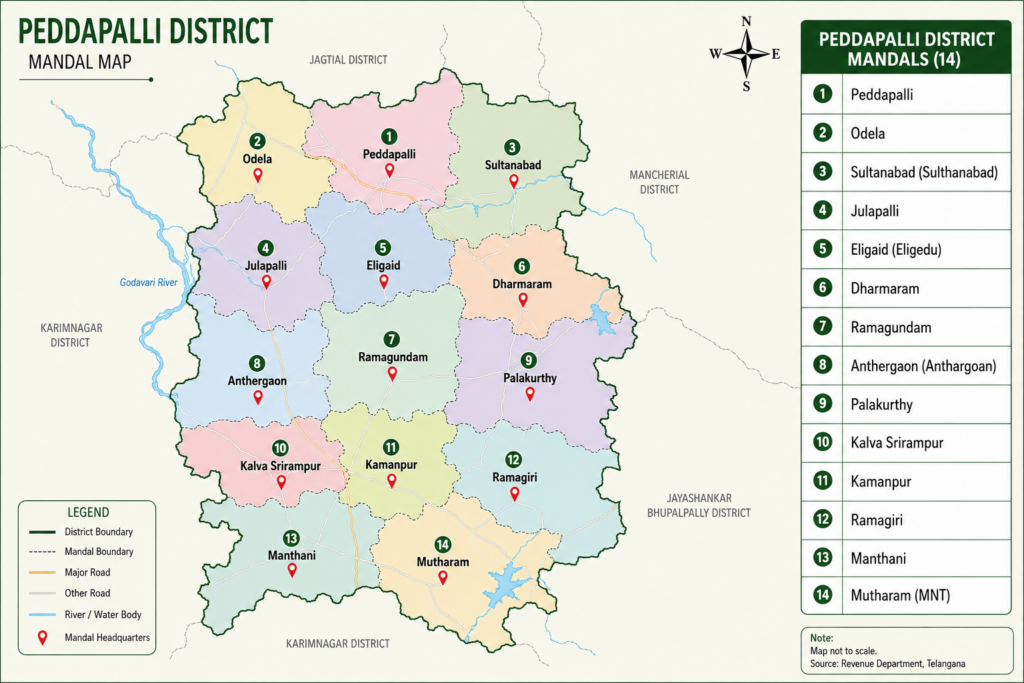
Mandals of Peddapalli
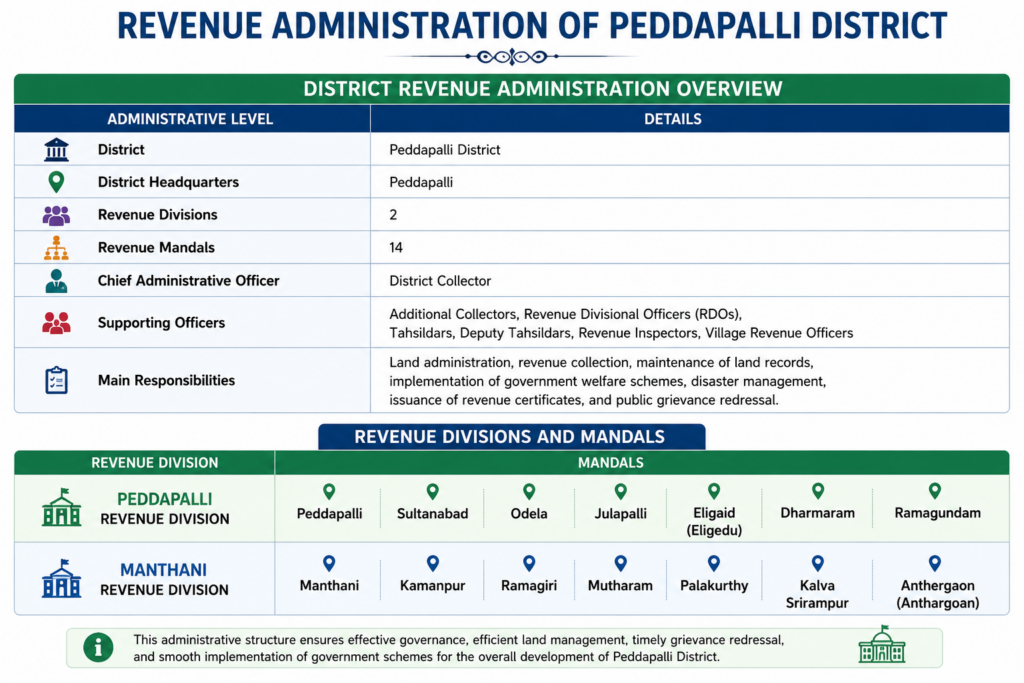
The 14 mandals of Peddapalli District are Peddapalli, Odela, Sultanabad (Sulthanabad), Julapalli, Eligaid (Eligedu), Dharmaram, Ramagundam, Anthergaon (Anthargoan), Palakurthy, Kalva Srirampur, Kamanpur, Ramagiri, Manthani, and Mutharam (MNT). Each mandal contributes to the district’s identity through its agricultural activities, industries, cultural heritage, religious sites, and natural resources. From the industrial growth of Ramagundam to the historical significance of Manthani and the agricultural richness of the surrounding mandals, these administrative divisions collectively support the economic, social, and cultural development of Peddapalli District. Each mandal has its own administrative headquarters that coordinate government services, revenue administration, agriculture, education, healthcare, and infrastructure development. Peddapalli District in Telangana comprises 14 mandals, each playing an important role in the district’s administration, economy, and cultural heritage.
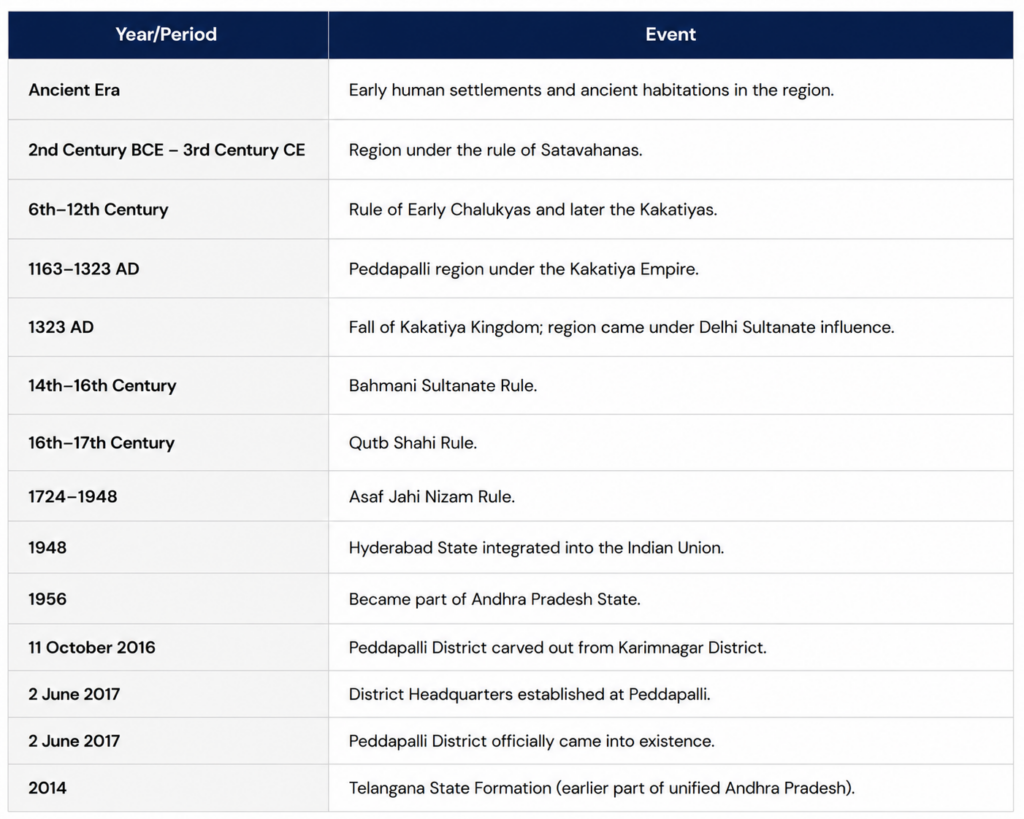
History of Peddapalli
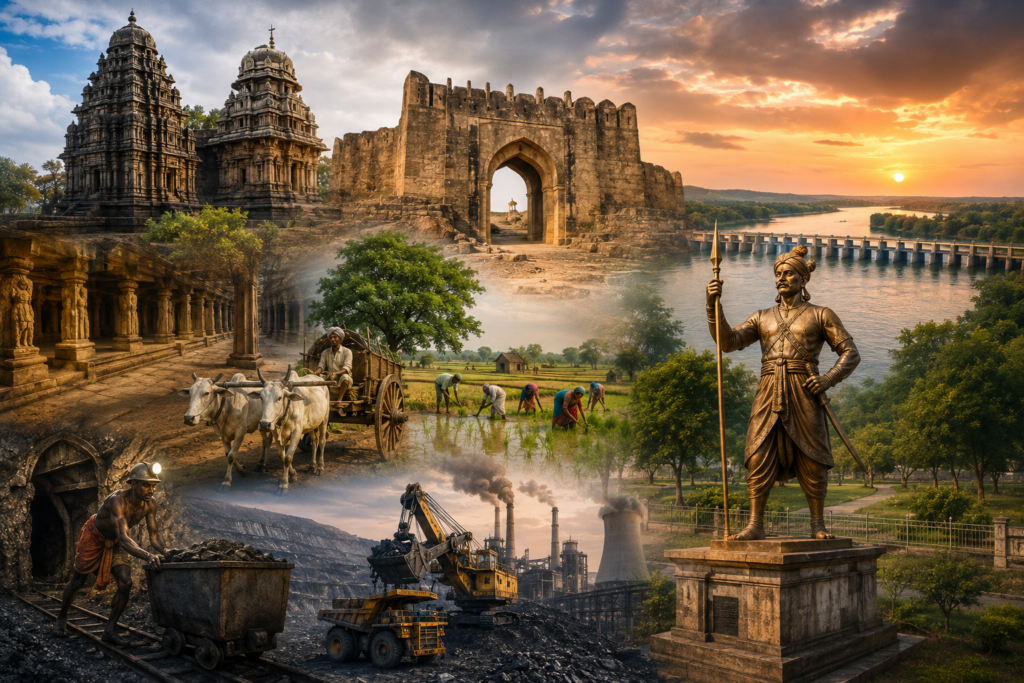
Peddapalli District has a rich historical heritage that reflects the cultural and political evolution of the Telangana region. The area was once ruled by several powerful dynasties, including the Satavahanas, Kakatiyas, Bahmani Sultans, Qutb Shahis, and the Asaf Jahi Nizams. These rulers contributed to the district’s architectural heritage, irrigation systems, temples, and administrative traditions. Ancient settlements, historical temples, and archaeological sites found across the district bear testimony to its long and vibrant past. The district has also played an important role in the economic development of Telangana. The discovery of coal reserves in the Singareni region and the establishment of major industries such as NTPC Ramagundam transformed Peddapalli into one of the state’s leading industrial centers. Peddapalli District has a rich historical legacy that dates back to ancient times. The region was once part of the powerful Satavahana Dynasty and later came under the rule of the Kakatiya Dynasty,
Famous in Peddapalli
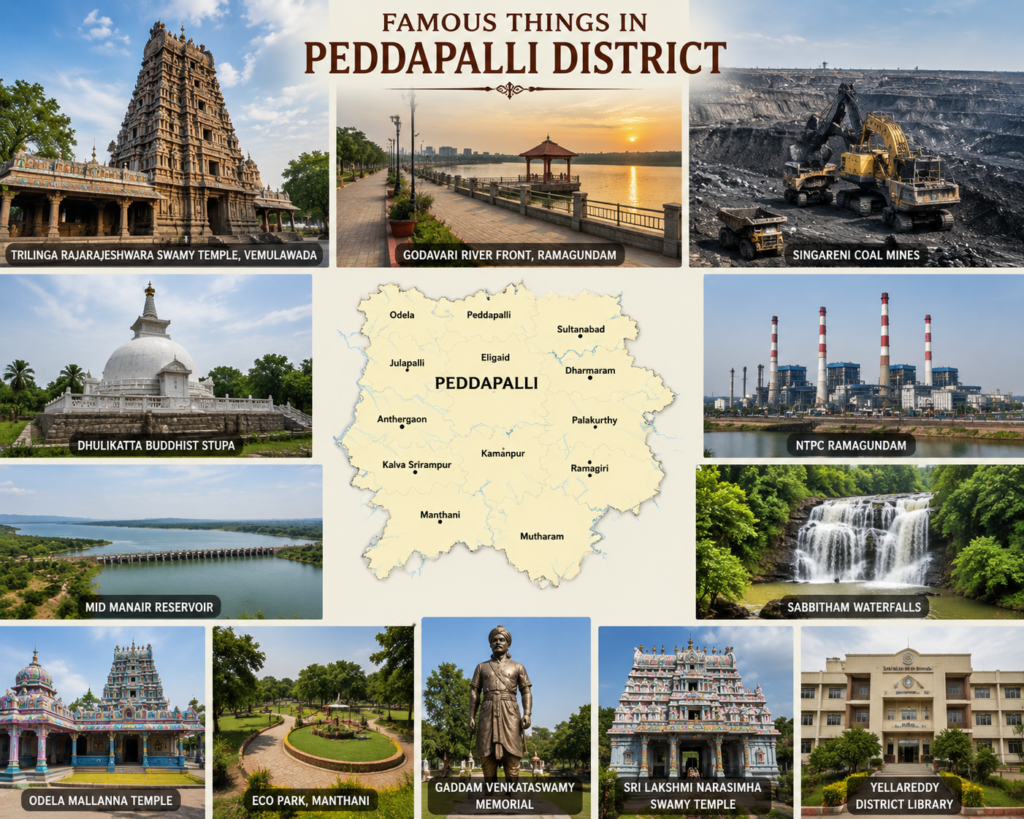
Peddapalli is widely recognized as one of Telangana’s major industrial hubs. The presence of NTPC Ramagundam, the Singareni coal mining region, and several large-scale industries has significantly contributed to the state’s economy and employment opportunities. Agriculture also plays a vital role in the district, supported by fertile lands and irrigation from the Godavari River. Together, these historical sites, religious landmarks, natural attractions, agricultural resources, and industrial achievements make Peddapalli District a unique destination that reflects both the rich heritage and modern progress of Telangana. Peddapalli District is known for its rich blend of historical heritage, religious significance, natural beauty, and industrial excellence. The district is home to several iconic landmarks, including the ancient Dhulikatta Buddhist Stupa, the revered Odela Mallanna Temple, and the Sri Lakshmi Narasimha Swamy Temple, which attract thousands of devotees and history enthusiasts every year. The scenic Godavari River, Mid Manair Reservoir, and lush parks.Peddapalli District is famous for its rich cultural heritage, industrial development, historical landmarks, and natural resources. It is widely recognized for the Ramagundam Thermal Power Station (NTPC).
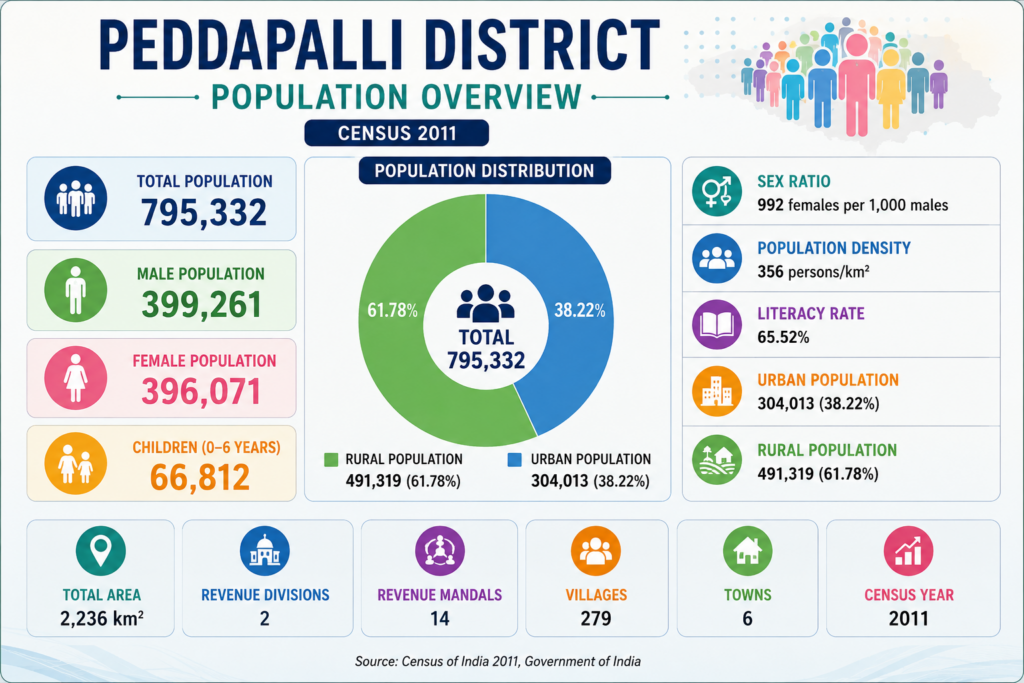
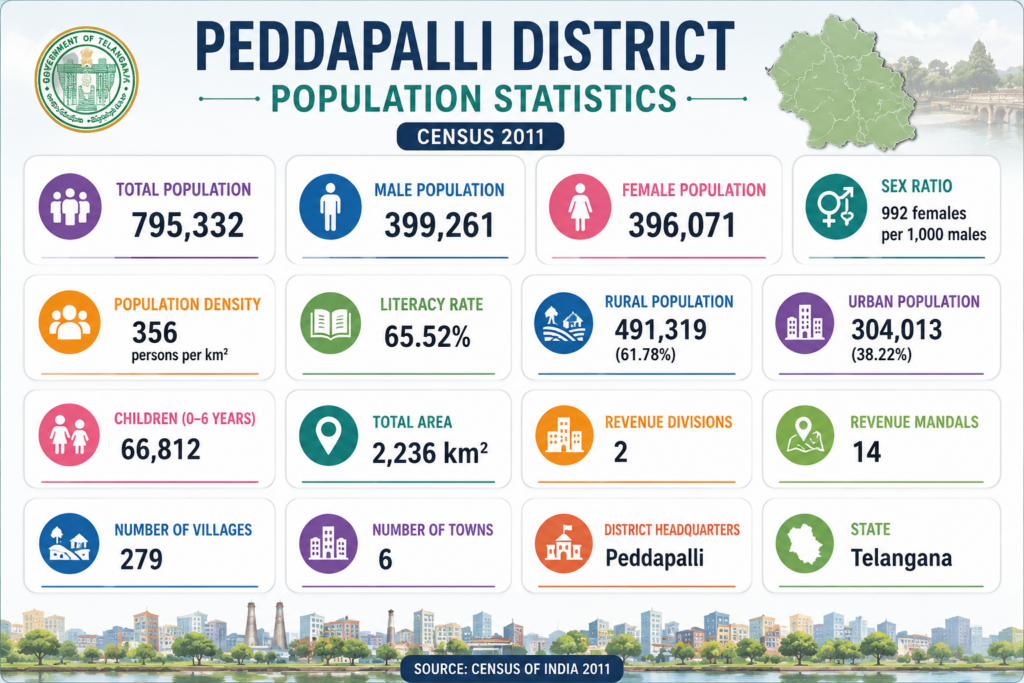
District Profile & Statistics
Previous History of Peddapalli district
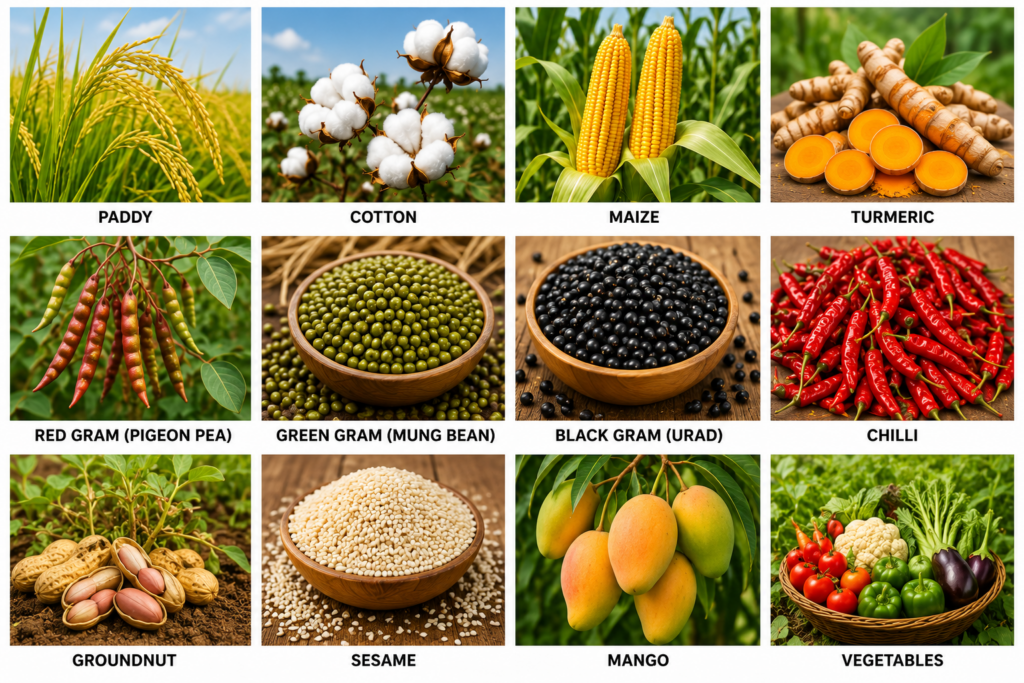
Agriculture of Peddapalli
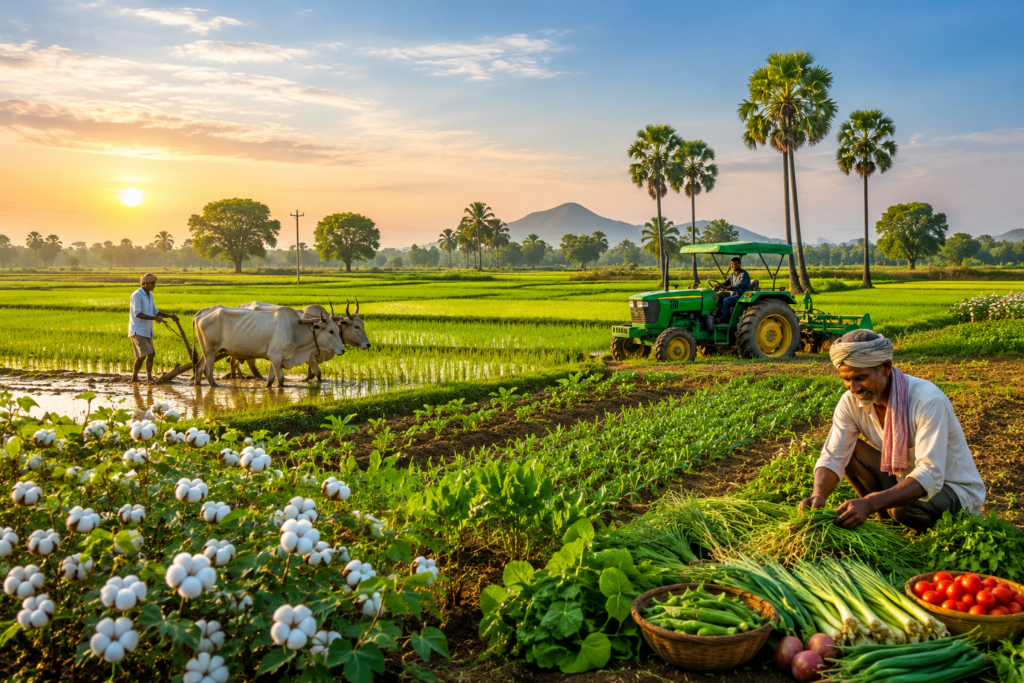
The major crops grown in Peddapalli District include Paddy, Cotton, Maize, Turmeric, Red Gram (Pigeon Pea), Green Gram (Mung Bean), Black Gram (Urad), Chilli, Groundnut, and Sesame. In addition to these field crops, horticultural cultivation of Mango and a variety of Vegetables has also gained importance across the district. These crops support the district’s agricultural economy, generate employment, and supply quality produce to local as well as regional markets, making agriculture one of the strongest pillars of Peddapalli’s overall development. Peddapalli District is one of Telangana’s agriculturally productive regions, where farming plays a vital role in the local economy. The district’s fertile black cotton and alluvial soils, along with irrigation from the Godavari River, Sri Ram Sagar Project (SRSP), Kaleshwaram Lift Irrigation Scheme, canals. Agriculture is one of the primary occupations in Peddapalli District, supporting the livelihoods of thousands of farming families.
Seasons of Peddapalli
Seasons of Peddapalli District
☀ Summer
March – June
Temperature ranges from 30°C to 45°C with hot and dry weather.
🌧 Monsoon
June – September
Heavy rainfall supports agriculture across Peddapalli. Thunderstorms are common.
❄ Winter
October – February
Pleasant weather with temperatures between 16°C and 30°C. Cool mornings and evenings
Economic Strengths of Peddapalli
Agriculture
Fertile black cotton and alluvial soils, along with irrigation from the Godavari River and major irrigation projects, support the cultivation of paddy, cotton.
Coal Mining
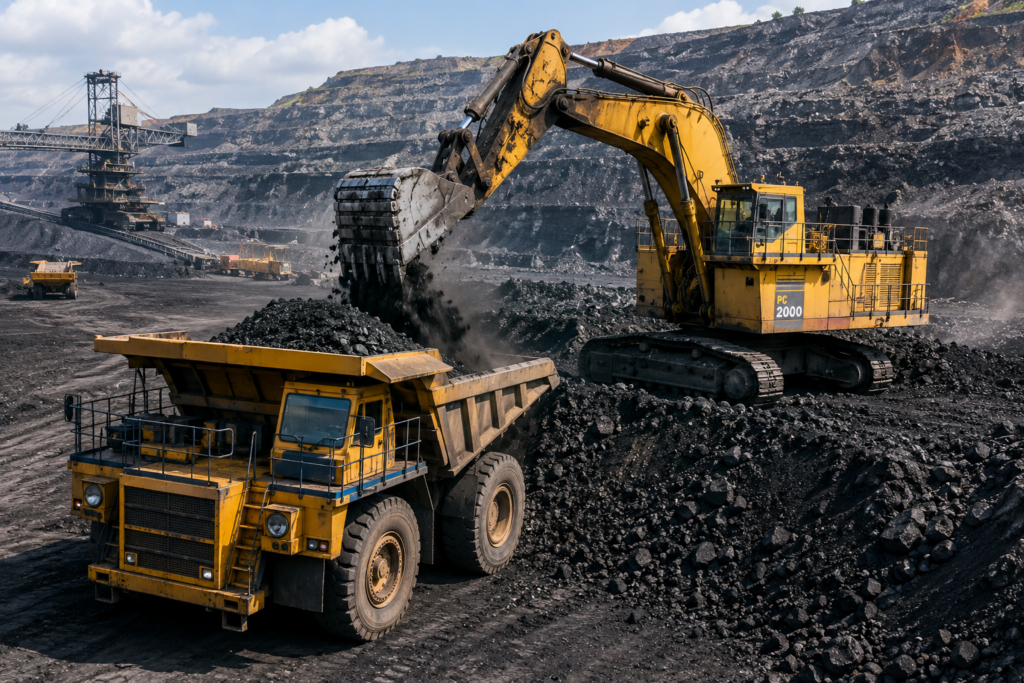
The district is a major coal-producing region due to the presence of Singareni Collieries Company Limited (SCCL).
Thermal Power
NTPC Ramagundam, one of India’s largest thermal power stations, is located in the district. It plays a vital role in electricity
Industrial Development
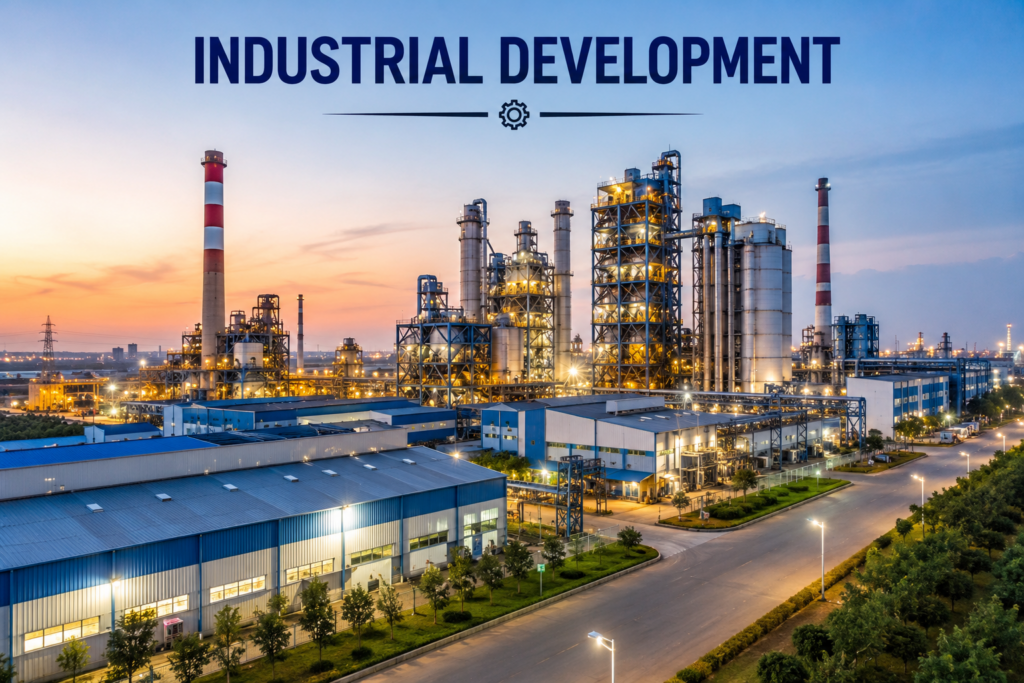
Peddapalli has a strong industrial base with thermal power plants, cement industries, engineering units, fertilizer-related industries, and small and medium-scale.
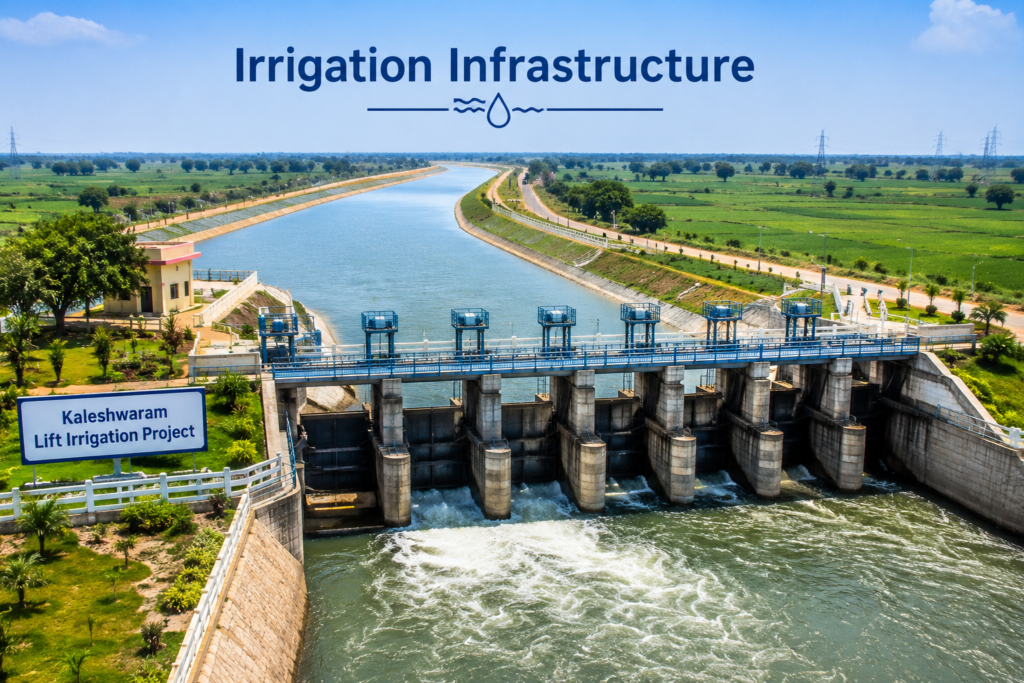
Irrigation Infrastructure
Major irrigation projects, including the Kaleshwaram Lift Irrigation Scheme, Sri Ram Sagar Project (SRSP), canals, and reservoirs, ensure a reliable water supply.
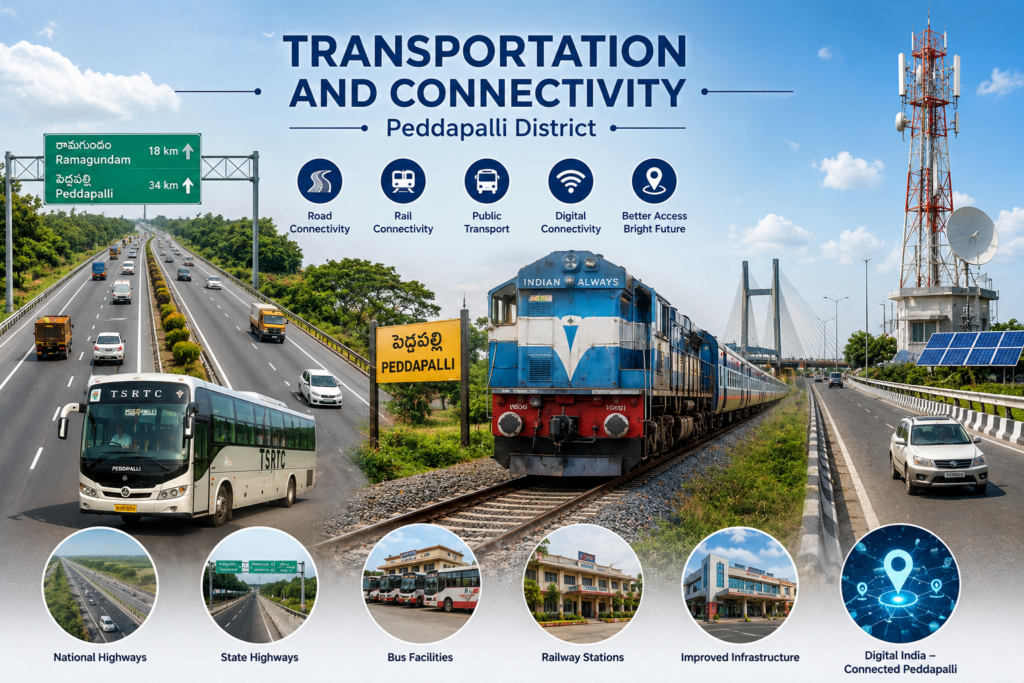
Connectivity
The district enjoys excellent road and rail connectivity through National Highways and major railway lines. This facilitates the movement of agricultural produce.
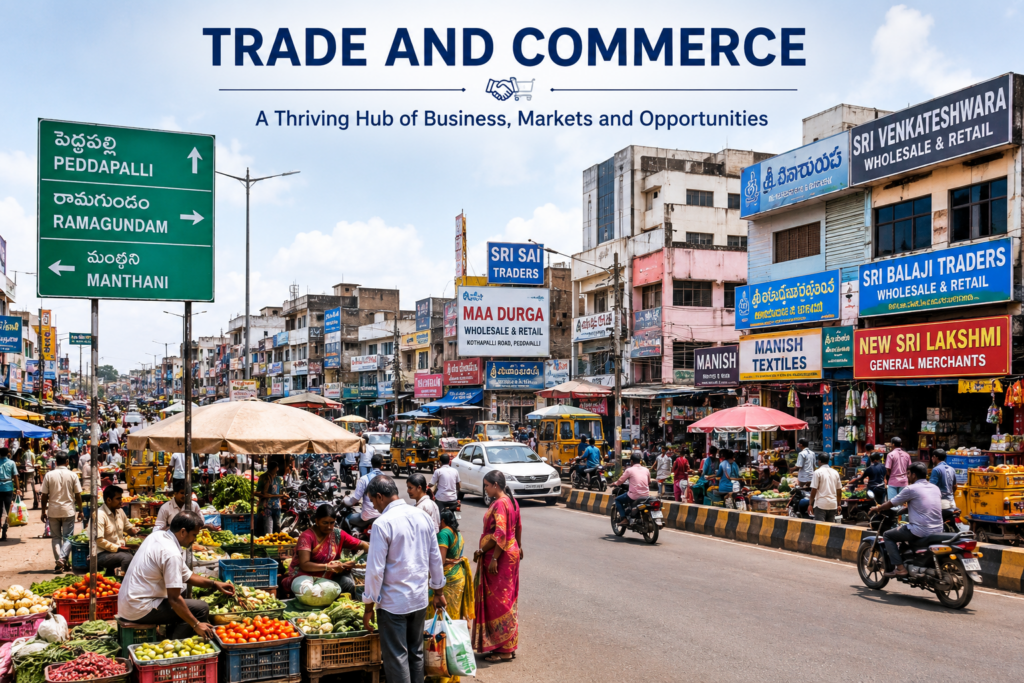
Trade and Commerce
Peddapalli serves as an important commercial center with agricultural markets, wholesale trading, retail businesses, banking services, and growing.
Employment Opportunities
Employment is generated through agriculture, coal mining, power generation, industries, government services, education, healthcare.